
Sign the guestbook.
Add the name you’d like visitors to see. A short message is optional. ProverbsGuys reviews entries before they appear.
Use a nickname if you prefer. Please keep private contact details out of your message.
Explore Ron Wyatt’s life, fieldwork, and discoveries through the biblical accounts that inspired him and the evidence he brought to public attention.
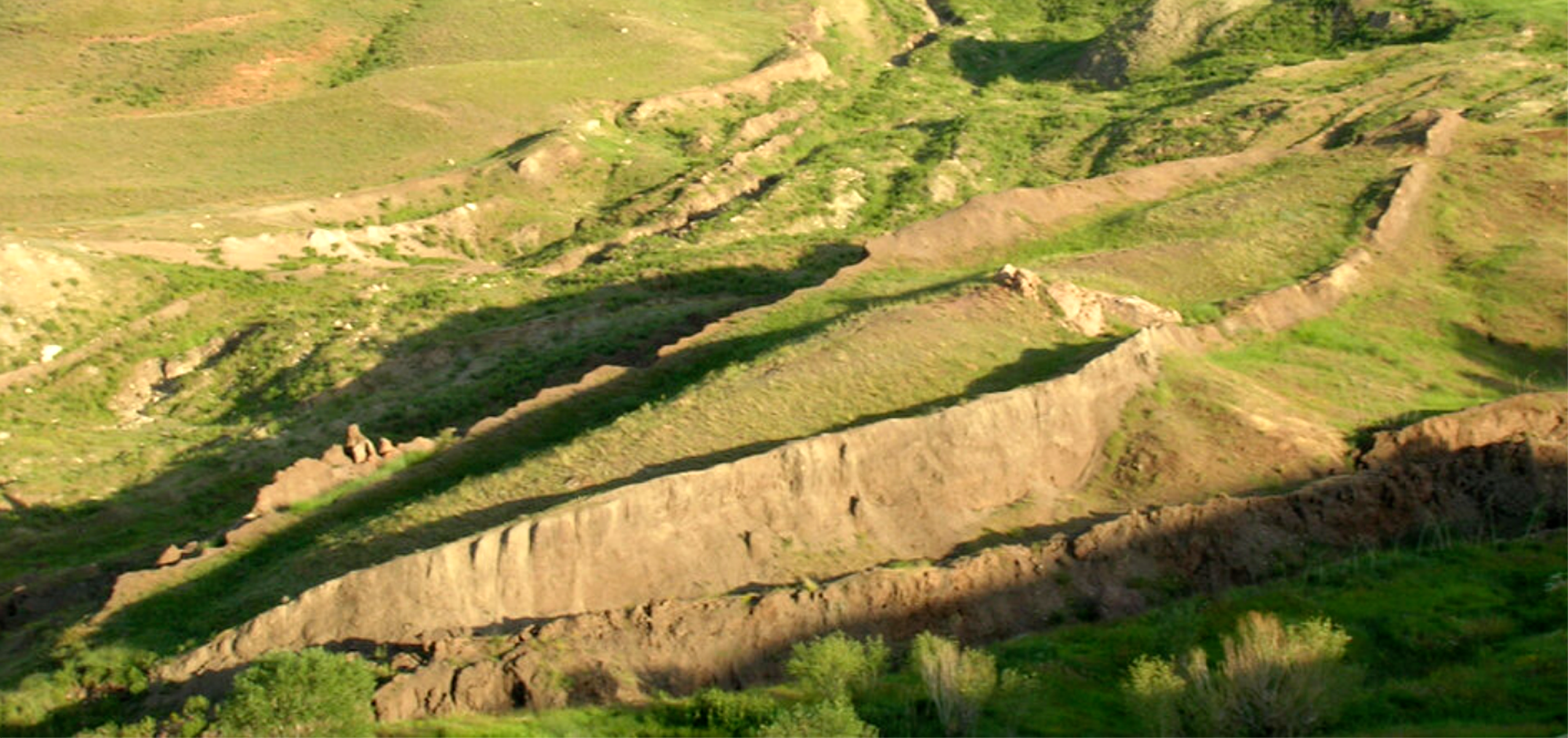
A nurse anesthetist and self-taught biblical explorer, Ron Wyatt followed an interest in the Durupınar formation from a 1960 LIFE magazine article to his first Turkey expedition with sons Danny and Ronny in 1977. His investigations later took him to Egypt, Saudi Arabia, and Jerusalem. Friends remembered an evangelistic purpose behind his work: helping people encounter the Bible and Jesus Christ.
Ron Wyatt devoted years of travel, fieldwork, and public presentations to searching for physical traces of biblical history. ProverbsGuys shares that legacy through interviews, documentary research, and rare home footage. Read the biblical passages, study the original accounts, and explore the evidence behind his work.
I was inspired by Ron Wyatt at 8 years old by a VHS tape at a homeschoolers gathering. It set the course of the rest of my life and brought me to where I am today.
I've been blessed being able to interview the people who were close to Ron. His work has strengthened my faith my whole life and I love sharing his story with others.
— Stephen Bowlin
Watch my interviews with Ron’s friends ↗Followed his research? Met him in person? Share your appreciation and connect with others who value his work.
Add the name you’d like visitors to see. A short message is optional. ProverbsGuys reviews entries before they appear.
Use a nickname if you prefer. Please keep private contact details out of your message.
Loading the guestbook…
These are voluntary visitor entries, not a claim that every signer knew Ron personally.
Search by place, topic, or biblical passage. Open each entry to follow the fieldwork, examine the evidence, and explore the original sources.
Links open the full passage on Bible Gateway.
Full view of the Durupınar formation in eastern Turkey, with both ends visible. Image supplied by ProverbsGuys. Wyatt identified this formation as Noah’s Ark; that identification is disputed.
Eastern Turkey, near Doğubayazıt
Beginning in 1977, Wyatt investigated the boat-shaped Durupınar formation with measurements, samples, metal detectors, and later radar. He identified it as Noah’s Ark and related its length to the 300 cubits in Genesis.
Genesis 6–9Evidence context: Disputed identification. Geological studies interpret the formation as natural; tourism recognition does not itself establish archaeological authentication.
First expedition: 1977; tourism dedication reported by Wyatt: June 20, 1987.
Ron Wyatt beside one of the large carved stones he investigated in Turkey. Photograph identified by the Wyatt family archive as taken in 1977.
Kazan / Arzap and the surrounding eastern Turkish region
Wyatt associated large pierced stones and later carved crosses in the region with Noah’s family. His wider Noah research included a proposed homestead and two grave markers he interpreted as Noah’s and his wife’s.
Genesis 8–9; 1 Peter 3:20Evidence context: The stones and markers exist; their association with Noah’s Ark and family is Wyatt’s interpretation.
Nuweiba on the Gulf of Aqaba, the area Wyatt proposed for the Red Sea crossing.
Nuweiba, Egypt, and the Gulf of Aqaba
Wyatt proposed an Exodus route crossing the Gulf of Aqaba from Nuweiba. He reported coral-covered forms he interpreted as Egyptian chariot remains, and columns that he connected with Solomon’s commemoration of the crossing.
Exodus 14–15Evidence context: Proposed crossing location. Reported underwater forms and their identification as Exodus-era chariot remains require independent authentication.
Wyatt’s family account describes dive trips in 1978.
The Gulf of Aqaba and northwestern Arabia from the International Space Station, displayed with north toward the top. Regional context for Wyatt’s Exodus route and Sinai interpretation.
Jebel al-Lawz area, Saudi Arabia
Wyatt identified the Jebel al-Lawz area with Mount Sinai and connected nearby features with the Exodus narrative, including an altar, stone pillars, cattle petroglyphs, and a split rock associated with water in the wilderness.
Exodus 17; 19–20; 24; 32; Galatians 4:25Evidence context: Proposed biblical identification. The identity of Mount Sinai and the meaning of nearby features remain disputed.
Wyatt’s first visit is reported as 1984 by his research organization.
Dead Sea region
Read the original account below
Dead Sea region
In 1989, Wyatt began investigating pale formations in the Dead Sea region that he identified with the cities of the plain. Sulfur nodules and the formations’ appearance became central to his interpretation of Genesis 19.
Genesis 13–14; 19; Deuteronomy 29:23; 2 Peter 2:6Evidence context: Wyatt’s interpretation of formations and sulfur samples; the city identifications are disputed.
Initial investigation: 1989; family archive reports additional work in 1990–1991.
Skull Hill / Garden Tomb area, Jerusalem
Read the original account below
Skull Hill / Garden Tomb area, Jerusalem
Wyatt reported entering a chamber containing the Ark of the Covenant in January 1982. He connected the chamber with a proposed crucifixion location and reported that Jesus’ blood had reached the mercy seat through a rock fissure.
Exodus 25:10–22; Matthew 27:50–54; Hebrews 9Evidence context: Not independently authenticated. The Wyatt family’s official account itself states that it cannot yet provide conclusive evidence of the claim.
Claimed chamber entry: January 6, 1982, in Wyatt’s own published account.
Djoser’s Step Pyramid at Saqqara, associated with Wyatt’s Joseph/Imhotep research. The monument is documented as part of a royal funerary complex.
Saqqara, Egypt
Wyatt proposed that Joseph and the Egyptian official Imhotep were the same person, associated structures at Saqqara with Joseph’s famine preparations, and explored a timber lifting-machine method for pyramid construction.
Genesis 41–47Evidence context: Historical identification and engineering proposal. Egypt’s Ministry of Tourism and Antiquities identifies Djoser’s complex as funerary architecture and Imhotep as its architect; Joseph’s identity with Imhotep is not established by that documentation.
No discoveries match that search.
Wyatt’s research also touched these places and ideas. Follow his wider investigations through the original accounts and research sources.
Family archives document Wyatt’s field interest in a proposed Babel region in southern Turkey. This remains an investigation rather than a conclusive discovery of the Tower of Babel.
Read the sourceWyatt’s 1989 book describes photographing crypts in a cave near Engedi and interpreting them as ancient Amorite burials. This is an ancillary claim, not excavated proof of giant skeletons.
Read the sourceThis is an established historical quarry and tourist site connected with later Ark investigations. It was known independently of Wyatt; the quarry itself was not discovered by Ron.
Read the sourcePair these accounts with the archaeology guide, where inscriptions, manuscripts, and excavated sites illuminate the Bible’s historical setting.
Ten supplied images bring a personal and visual dimension to the research. Open any image to see the complete frame and zoom into its details.
This collection preserves the supplied images, their captions, and embedded marks. Dates and identifications written into an image belong to that supplied material; the sourced discovery accounts above provide the research context.
Ron Wyatt wearing an aviation headset. The supplied photograph retains its ronwyatt.com watermark.
Portrait of Ron Wyatt in a broad-brimmed hat, supplied for the ProverbsGuys collection.
A supplied collage of underwater forms associated with Red Sea crossing research. Identification of the forms is discussed in the discovery account above.
Visitors beside a panel of animal petroglyphs, included with the supplied Sinai research material.
Ron Wyatt at the Durupınar formation in eastern Turkey, supplied for the research collection.
Ron Wyatt holding a sample in a supplied image labelled “CNN — Sept. 27, 1991.” The date and network label are part of the supplied graphic.
Ron Wyatt pictured beside a wooden Ark model in the supplied collection.
Supplied press-conference graphic captioned February 1987 and naming Ron Wyatt and Governor Şevket Ekinci. The original caption is preserved.
Ron Wyatt sharing a meal with two young men in a supplied image. No additional identities or date are assigned here.
Ron Wyatt among wildflowers with a mountain in the background, supplied for the ProverbsGuys collection.
Explore the life timeline and the Ark of the Covenant illustration. Open either graphic to zoom and scroll through the details.
A supplied illustrated research timeline. Read the dated discovery accounts on this page alongside it; the illustrations do not establish the claims as archaeological findings.
Open the original full-size graphicProverbsGuys’ supplied illustration of Wyatt’s Ark of the Covenant interpretation. This is a research graphic rather than a photograph or an authenticated site survey.
Open the original full-size graphicContinue your study with our books. Each title links directly to the Amazon listing you can explore.
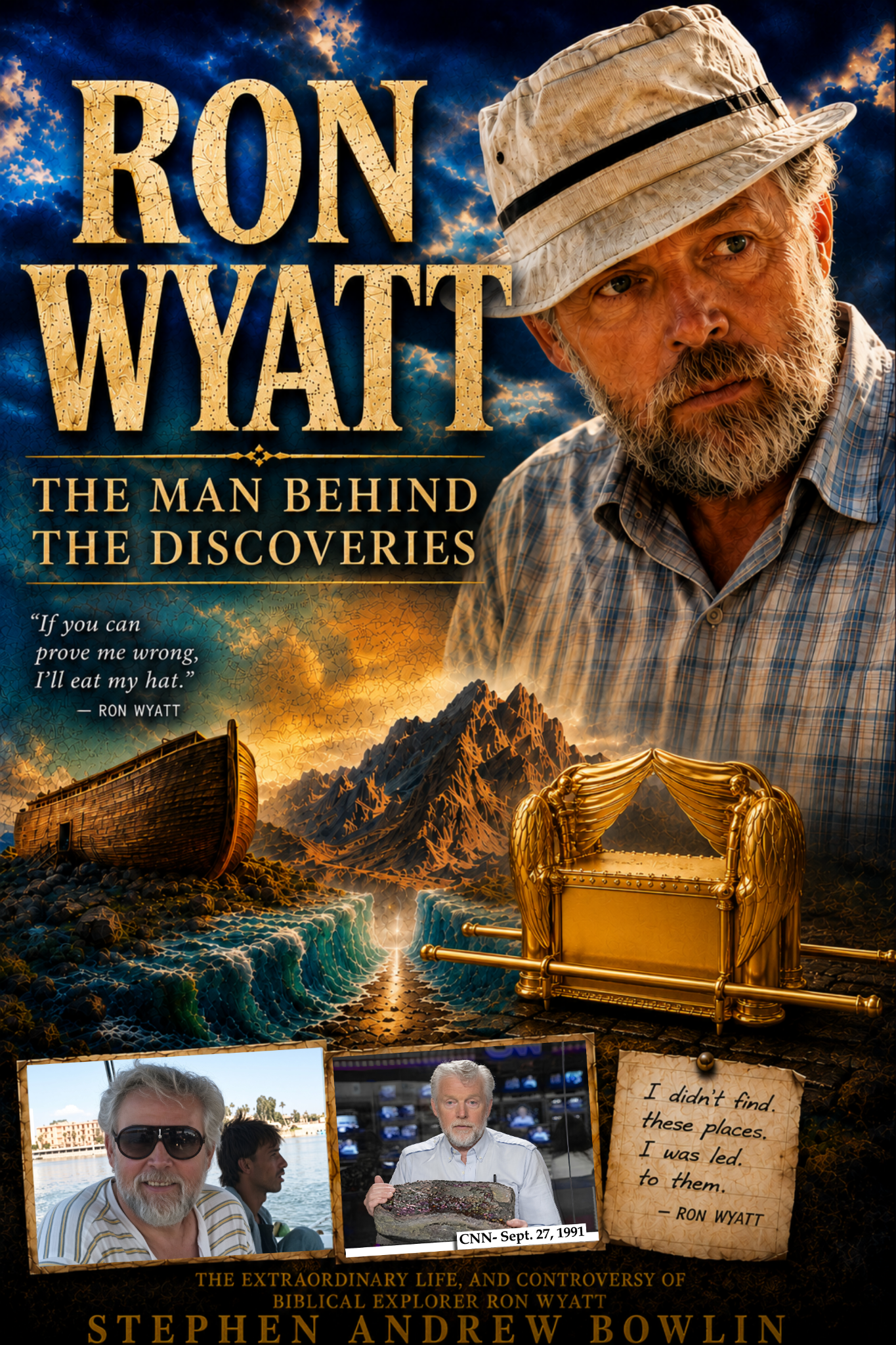
View the full description, available formats, and current listing on Amazon.
View book on Amazon